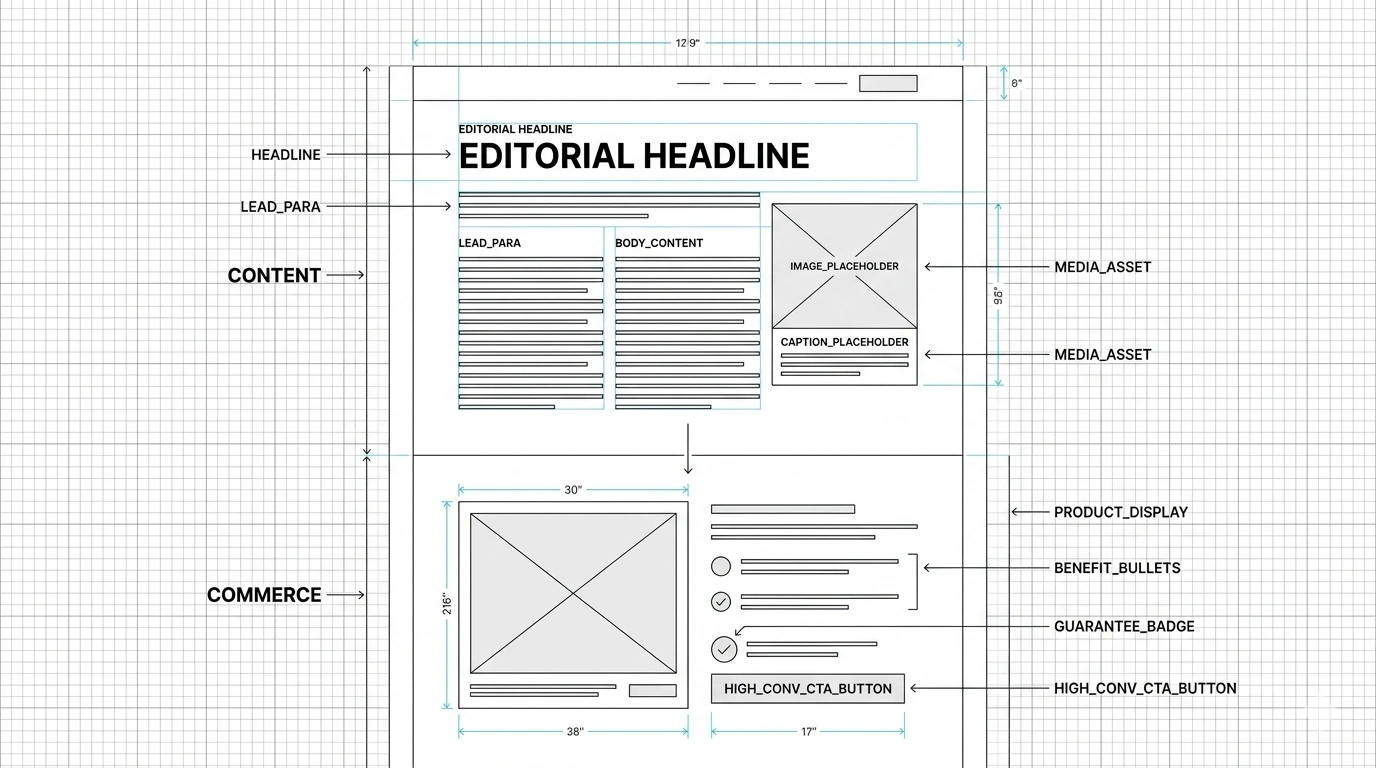
Native Ads Landing Page: Build, Optimize & Test
A native ads landing page is where the promise in your ad becomes an actual visitor experience. If the headline attracts a click but the page feels unrelated, hides important information, loads poorly, or makes the next step confusing, the campaign can lose momentum after the click.
The goal is not to make an advertisement look like something it is not. The goal is to continue the visitor's topic, answer the question that earned the click, explain the offer honestly, and make the next action easy to understand.
This guide gives you a practical framework for choosing a page format, structuring the content, checking the mobile experience, reviewing policy risks, and testing performance without relying on universal conversion promises or unsupported benchmarks.
Message match → useful opening → clear offer → credible evidence → transparent disclosures → mobile usability → measurable CTA → controlled testing.
What Is a Native Ads Landing Page?
A native ads landing page is the destination page reached after someone clicks a native advertisement, sponsored recommendation, or promoted content unit. Depending on the campaign, it may be an advertorial, a product page, a quiz, a comparison page, or a lead-generation page.
The right format depends on the audience's awareness, the complexity of the offer, the claim you need to substantiate, and the action you want visitors to take. A page should be useful on its own—not merely a bridge that delays revealing what is being promoted.
How to Choose the Right Native Advertising Landing Page
| Page format | Useful when | What to watch |
|---|---|---|
| Story-led advertorial | The audience needs context to understand a problem, approach, or offer. | Keep the story truthful, relevant, and clearly connected to the product or advertiser. |
| Guide or listicle | Visitors need to compare options, understand criteria, or learn a process. | Make the selection criteria meaningful and disclose commercial relationships where relevant. |
| Quiz or interactive page | The offer benefits from genuine personalization or qualification. | Ask only useful questions, explain data use, and make results more than a disguised sales pitch. |
| Direct-response product page | Visitors already understand the product or are ready to evaluate the offer. | Show price, terms, limitations, proof, and the next step clearly. |
| Lead-generation page | The campaign's main goal is a qualified enquiry or sign-up. | Keep the form proportionate to the value offered and explain what happens after submission. |
Do not assume one format always wins for cold traffic or retargeting. Treat the format as a hypothesis, then compare results using the same audience, offer, and measurement rules.
The Anatomy of an Effective Native Ads Landing Page
1. A headline that continues the ad's promise
Use the same topic, angle, and level of specificity as the ad. If the creative promises a comparison, the page should provide a comparison. If it raises a question, address that question early. Avoid a headline that implies a personal test, independent review, or specific result unless the page can substantiate it.
2. An opening that answers “Why am I here?”
Confirm the topic quickly and show the reader what the page will help them understand. Do not force visitors through a long preamble before delivering the information implied by the ad. Remove any hook that creates an expectation the page cannot fulfil.
3. Useful content before the decision point
Explain the problem, the available options, how the offer works, and the factors a reader should consider. Use specific details only when they are accurate and supportable. If the page includes a testimonial, study, product result, or comparison, make sure it is genuine, relevant, and presented with its limitations.
4. A clear and honest offer
Identify the advertiser or seller, explain what is being offered, and make material conditions easy to find. Avoid fake urgency, fabricated scarcity, unsupported health or financial promises, and claims that imply guaranteed outcomes without adequate evidence.
5. A CTA that describes the next step
Use action text that tells people what happens next—such as “View the product details,” “Compare plans,” or “Request information.” The destination after the click should match that description. Do not make a button appear to perform one action when it leads to another.
Message Match: Keep the Ad and Page Consistent
Message match is the alignment between the ad creative and the destination page. Check these four elements before launch:
- Topic: The page directly addresses the subject introduced in the ad.
- Expectation: The promised guide, comparison, explanation, or offer is actually present.
- Evidence: Claims and examples on the page support what the ad communicates.
- Next step: The CTA follows naturally from the content and accurately describes the destination.
Consistency does not mean copying the same headline word for word in every case. It means avoiding a bait-and-switch between the click and the landing experience. Do not imitate a publisher's identity or conceal that the page is commercial content.
Native Ads Landing Page Compliance: What to Check
Requirements vary by advertising network, campaign, product category, audience, and jurisdiction. No generic checklist can guarantee approval. Before launch, review the current rules published by the network and any applicable legal requirements.
- Truthful claims: Substantiate objective statements and avoid unsupported guarantees.
- Commercial transparency: Identify sponsored or promotional content clearly and disclose relevant affiliate or material relationships.
- Testimonials and images: Use authentic material with appropriate permission; do not fabricate reviews or imply typical results from exceptional cases.
- Data collection: Explain relevant data practices and provide privacy information appropriate to the page and market.
- Offer terms: Make material prices, recurring charges, eligibility limits, refund terms, and other conditions clear where applicable.
- Destination consistency: Ensure the landing page works, matches the ad, and does not use misleading redirects or materially different content.
- Restricted categories: Check the network's rules for the specific product or service before building the campaign.
Useful starting points are the official policy resources for Taboola, Outbrain, and MGID. These links are starting points, not a statement that a particular page or offer is approved.
For a broader discussion of native advertising disclosures, see the FTC's guide to native advertising. Its legal relevance depends on the campaign and jurisdiction; it is not a substitute for jurisdiction-specific advice.
Mobile and Technical Optimization
Check the actual devices, locations, and connection conditions represented in your campaign rather than assuming a fixed mobile share or a universal loading-time target.
Run these checks on a real phone
- Can visitors read the main text without zooming?
- Does the first screen communicate the topic and the page's purpose?
- Do images resize correctly without pushing important content off-screen?
- Can users tap links, close overlays, and complete forms comfortably?
- Does the page remain usable while images or third-party scripts load?
- Are consent controls and disclosures accessible rather than hidden behind the CTA?
- Do analytics events fire once and correspond to real actions?
Use field data and lab diagnostics together where available. Prioritize the slowest or most disruptive elements you can verify, such as oversized images, render-blocking resources, unnecessary scripts, and layout shifts. A fast page helps usability, but speed alone does not establish that the offer or campaign will convert.
For more detail, read our mobile advertorial optimization guide.
How to Measure and Test a Native Ads Landing Page
Choose a primary conversion that represents real business value, then instrument the steps leading to it. Depending on the funnel, the useful measures may include landing-page views, engaged visits, CTA clicks, completed leads, purchases, qualified leads, and cost per acquisition.
| Observed pattern | What to investigate first |
|---|---|
| Many ad clicks, few landing-page views | Redirects, page availability, tracking setup, and load failures. |
| Landing-page views, little engagement | Message match, opening relevance, readability, and whether the promised information appears quickly. |
| Engagement, few CTA clicks | Offer clarity, evidence, CTA wording, placement, and whether the next step feels relevant. |
| CTA clicks, few completed actions | Form errors, checkout friction, unexpected terms, broken links, and mismatch between CTA and destination. |
| Conversions, poor business quality | Lead qualification, audience targeting, offer fit, and downstream outcomes—not just the landing-page conversion rate. |
Change one major variable at a time where practical, define the success metric before the test, and avoid drawing conclusions from tiny or uneven samples. Segment results by network, placement, device, creative, and audience when the data volume supports it. A higher click-through or form-completion rate is not automatically better if lead quality or revenue falls.
Why a Native Ads Landing Page May Get Clicks but Not Convert
Start by checking the full path, not by rewriting the entire page at once. Confirm that the tracking is accurate, the page loads, the ad promise is fulfilled, the offer is understandable, and the CTA leads to a functioning next step. Then compare traffic segments to see whether the problem is concentrated in a particular creative, placement, device, or audience.
Use the evidence to select a focused test—for example, clarifying the headline, moving the offer explanation earlier, simplifying a form, or improving the mobile layout. Record the change and its result. Avoid treating a single campaign's outcome as proof that a tactic works universally.
A page should be built around your offer, traffic source, evidence, conversion goal, and required disclosures—not copied from a generic template without review.
Frequently Asked Questions
Build for the Click You Bought
A strong native ads landing page does more than continue the visual style of an ad. It fulfils the click's promise, makes the commercial offer understandable, supports important claims, and gives visitors a usable next step on the device they actually use.
Start with message match and page clarity. Verify compliance against current official requirements. Measure the path from click to meaningful outcome, then test focused improvements against a defined goal.
Related resources: